
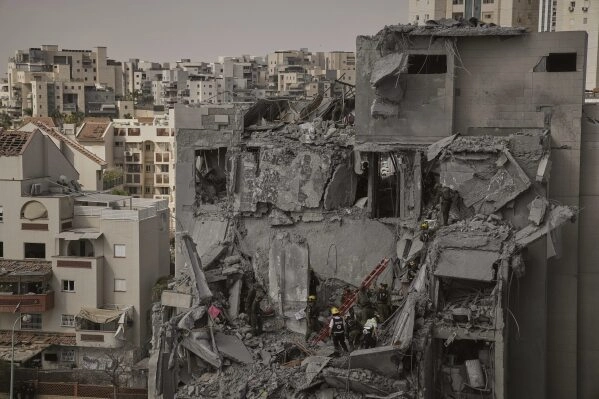
Israel and Iran Agree to Ceasefire Ending 12-Day War, Brokered by Trump
Tehran confirms conditional truce as Israeli strikes halt and Trump takes credit for mediating the agreement.
Former U.S. President Donald Trump announced on Monday that Israel and Iran had agreed to a ceasefire, ending nearly two weeks of intense military conflict that displaced millions and brought the region to the brink of wider war.
The ceasefire follows days of Israeli and U.S. airstrikes on Iranian nuclear sites, amid growing fears that Tehran was nearing nuclear weapon capability. Iran has consistently denied such ambitions.
Posting on Truth Social, Trump wrote, “I would like to congratulate both Countries, Israel and Iran, on having the Stamina, Courage, and Intelligence to end, what should be called, ‘THE 12 DAY WAR’.”
While Israel has yet to officially comment, an Iranian foreign ministry statement confirmed a conditional truce. Iranian diplomat Abbas Araqchi stated that Iran would halt hostilities if Israel stopped its attacks by 4 a.m. Tehran time on Tuesday. No new Israeli strikes have been reported since the deadline passed.
Araqchi, however, added that Iran’s final decision on halting operations would depend on Israel’s actions, saying the matter remains under review.
A senior U.S. official confirmed that Trump mediated the deal in a call with Israeli Prime Minister Benjamin Netanyahu, adding that Israel agreed to stand down provided Iran refrained from further retaliation.
Qatar also played a key role in the negotiations. Its Prime Minister, Sheikh Mohammed bin Abdulrahman Al Thani, reportedly secured Tehran’s agreement through direct talks.
Meanwhile, U.S. officials including Vice President JD Vance, Secretary of State Marco Rubio, and special envoy Steve Witkoff maintained both direct and indirect communications with Iranian counterparts.
While calm appeared to prevail after the ceasefire deadline, Israel issued fresh evacuation alerts for parts of Tehran late Monday and early Tuesday. Air raid alarms also sounded in Israel’s Golan Heights region, raising fears of continued volatility.
Earlier strikes by the U.S. and Israel targeted Iran’s nuclear facilities using powerful bunker-busting bombs. The attacks came after Iran launched a retaliatory missile strike on the U.S. Al-Udeid air base in Qatar, which caused no casualties thanks to prior warning.
Vice President Vance stated that the U.S. strikes destroyed Iran’s ability to develop nuclear weapons: “Now Iran is incapable of building a nuclear weapon with the equipment they have because we destroyed it,” he told Fox News.
Trump, however, hinted at broader ambitions in a recent social media post, suggesting a desire to dismantle Iran’s ruling regime. Israeli strikes on Evin prison and other regime-critical infrastructure underscored that objective.
Financial markets responded positively to news of the ceasefire. The S&P 500 futures rose 0.4% in after-hours trading, while oil prices dipped amid expectations of reduced supply disruptions.
As of now, both countries appear to be observing the ceasefire, though the situation remains fluid. Iran’s leadership has signaled it will not escalate further—so long as Israel abides by the agreement.